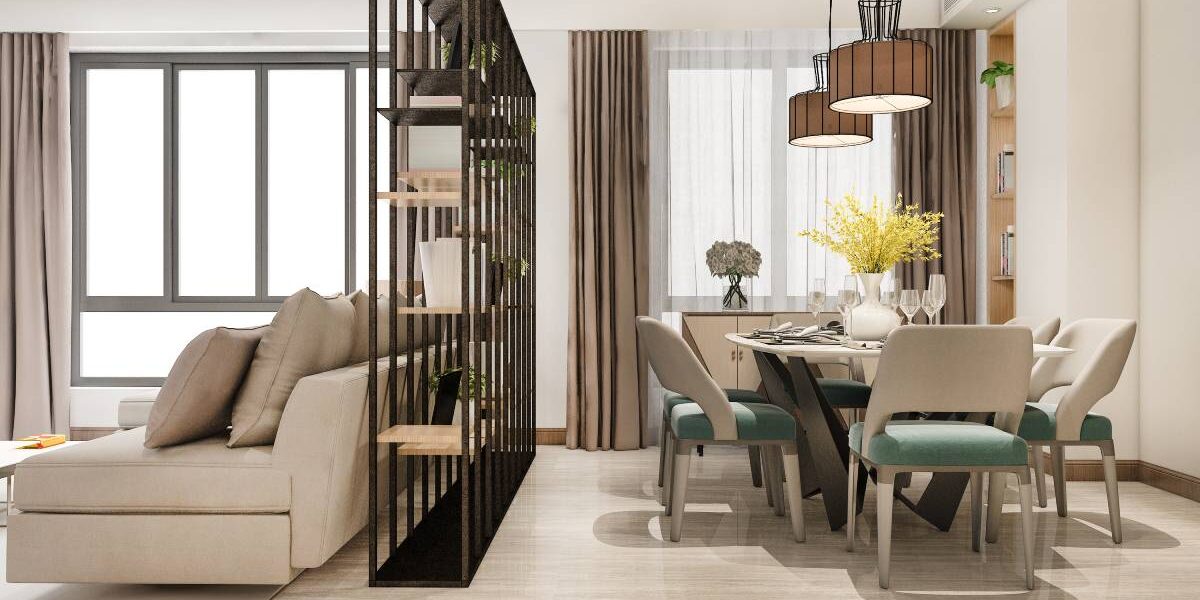
Are you struggling to manage an open-plan office or a sprawling living room?
Open spaces offer light and airflow, but they often come with a heavy price: a lack of privacy, increased noise distractions, and a cluttered visual field. You know you need to separate the space, but looking for solutions leads you down a rabbit hole of confusing terminology. “Partitions,” “dividers,” “screens,” and “walls” are used interchangeably by sellers, making it nearly impossible to know if you are buying a piece of furniture or signing up for a construction project.
This guide ends the confusion. Below, we break down the critical structural and functional differences between a partition and a divider, ensuring you choose the solution that fits your budget, your acoustics needs, and your long-term goals.
What is the difference between a partition and a divider?
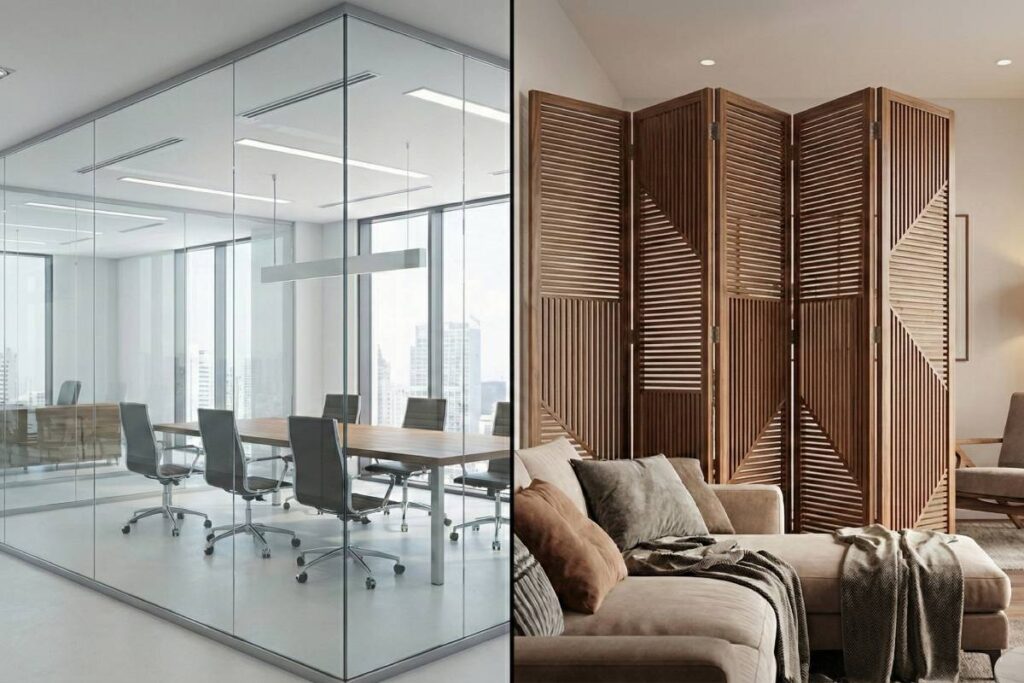
The main difference lies in permanence and structure. A partition is a semi-permanent architectural element, often floor-to-ceiling, designed to create distinct rooms and block noise (e.g., glass walls). A divider is a portable piece of furniture or screen used to visually separate zones without altering the building structure (e.g., a folding screen or bookshelf).
At a Glance: The Comparison Matrix
If you are in a rush, this table outlines the technical specifications that separate these two solutions.
| Feature | Partition | Room Divider |
| Primary Category | Architecture / Fixture | Furniture / Decor |
| Installation | Professional installation often required (tracks, mounts) | No installation; unpack and place |
| Permanence | Semi-permanent to Permanent | Temporary and Portable |
| Acoustic Rating | High (Often sound-rated) | Low (Visual privacy only) |
| Height | Usually Floor-to-Ceiling | Partial height (Eye-level) |
| Cost | High | Low to Medium |
Deep Dive: What is a Partition?
Think of a partition as a substitute for a wall.
In the world of interior design and construction, a partition is a vertical structure used to divide a room into smaller, distinct areas. Unlike standard drywall, partitions are often modular or made of glass, allowing them to be deconstructed or moved during a major renovation, but they are not designed to be moved daily.
Key Characteristics
- Structural Integration: They are often attached to the floor, ceiling, or existing walls.
- Floor-to-Ceiling: They usually span the full height of the room to maximize privacy.
- Material Density: Made from glass, aluminum, steel, or heavy-duty composite panels.
The “Superpower”: Acoustic Control
Because partitions create a sealed barrier, they are the only viable choice if soundproofing is your priority. If you need a conference room where confidential conversations can happen, you need a partition, not a divider.
Best Used For:
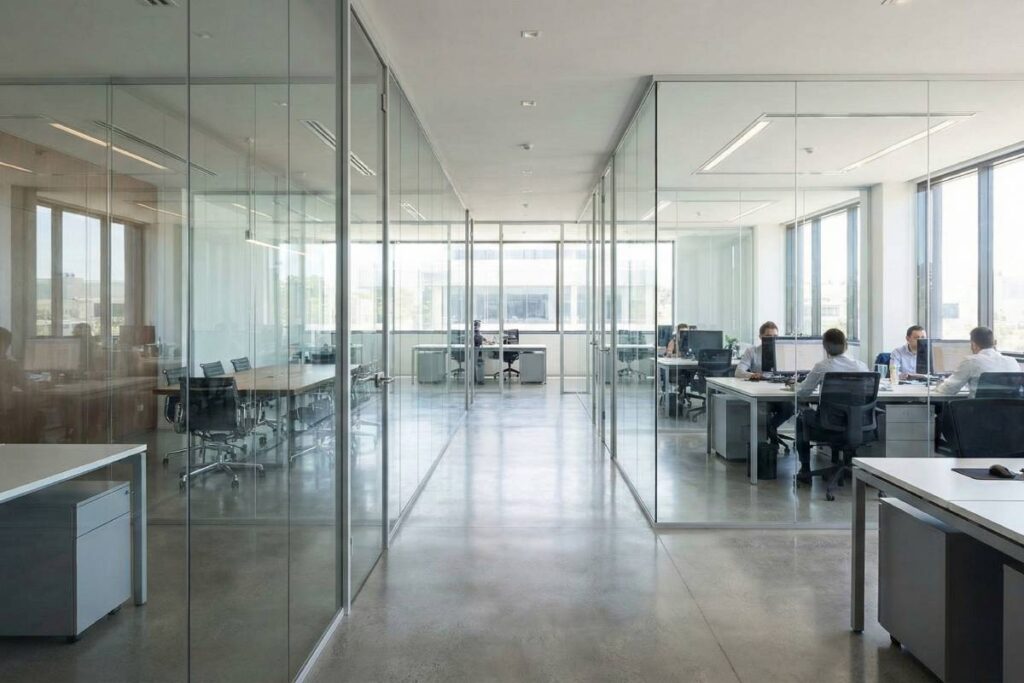
- Creating private offices within an open floor plan.
- Meeting rooms and conference areas.
- Separating a reception area from the workspace.
Deep Dive: What is a Room Divider?
Think of a divider as functional furniture.
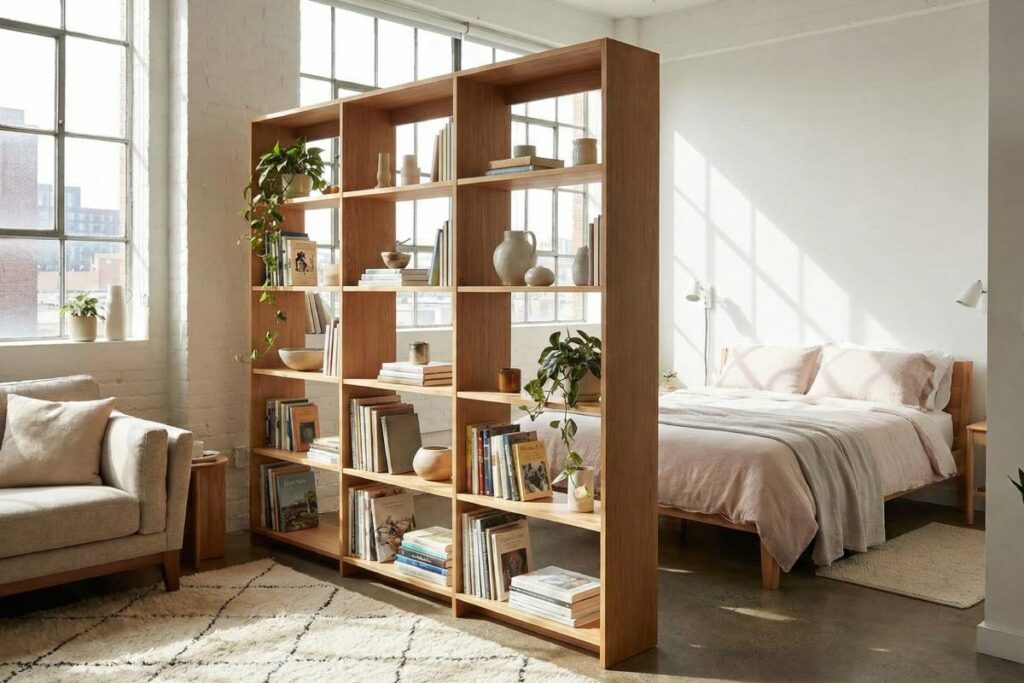
A room divider is a flexible screen or object placed to break up visual lines. It implies separation without actually building a barrier. Dividers are lightweight, often foldable or on wheels, and can be moved by a single person in seconds.
Key Characteristics
- Structural Integration: They are often attached to the floor, ceiling, or existing walls.
- Professional Finish: Whether you are building a stud wall or installing glass panels, the finish matters. For permanent drywall partitions, you will often need experts like Pro Plaster N Paint to ensure the plastering is flawless. Afterwards, choosing the right paint is critical to make sure the new wall blends seamlessly with your existing architecture.
- Material Density: Made from glass, aluminum, steel, or heavy-duty composite panels.
The “Superpower”: Flexibility
The primary benefit of a divider is agility. You can deploy a divider to hide a messy desk during a Zoom call, then fold it away when you want the room to feel large again. They are ideal for multi-use spaces.
Best Used For:
- Hiding clutter or storage areas.
- Creating a “zoom background” zone.
- Directing foot traffic in lobbies or restaurants.
- Studio apartments needing a visual break between “bedroom” and “living room.”
Critical Decision Factors: How to Choose
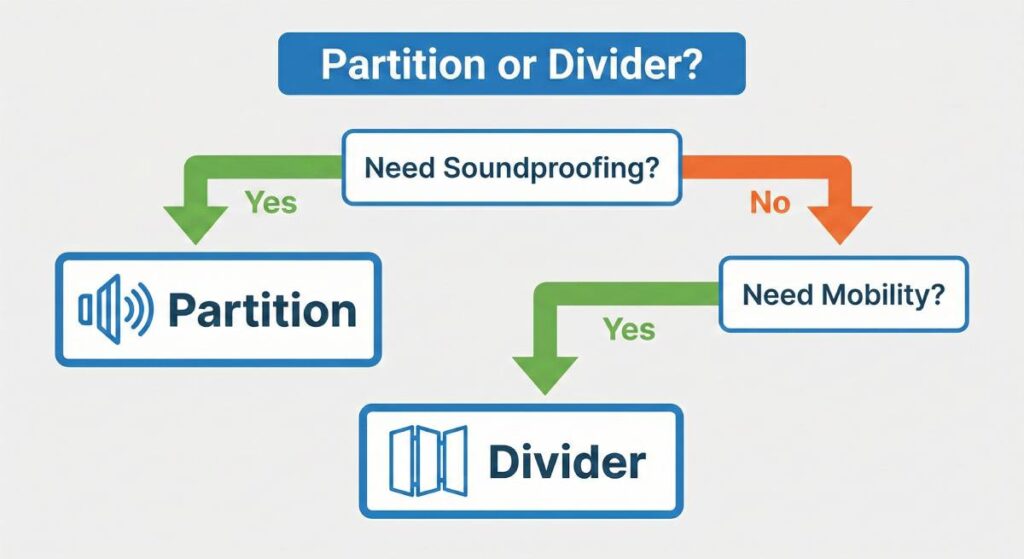
Still undecided? Use these three “Filter Questions” to make the right purchase.
1. Do you need to block noise?
- Yes: You must choose a Partition. A divider will do nothing to stop phone calls or chatter from travelling over the top of the screen.
- No: A Divider is sufficient if you only need to block visual distractions.
2. Do you rent or own the space?
- Rent: Be careful with partitions. Since they attach to floors and ceilings, they may violate lease terms regarding “structural alterations.” Dividers are 100% safe for renters.
- Own: Partitions are a great investment that can increase the property value by adding “rooms” without the cost of framing drywall.
3. How often will the layout change?
- Daily/Weekly: Use Dividers (or mobile whiteboards).
- Yearly/Never: Install Partitions.
Conclusion
The language of interior design can be vague, but the functionality is black and white.
- Choose a Partition when you need a “wall without the drywall”—something that offers silence, security, and permanence.
- Choose a Divider when you need a “visual shield”—something flexible, decorative, and temporary.
By understanding this distinction, you avoid the common mistake of buying a flimsy screen when you actually need a soundproof office, or overspending on construction when a simple bookshelf would have sufficed.
Which solution fits your current project: are you building a permanent sanctuary or just hiding the mess?